From Reviews to Strategy: How I Used Sentiment Analysis to Uncover Product Risks at Beats by Dre
Sentimental Analysis to Uncover Risks at Beats by Dre
Tobou Egbekun
1/20/20262 min read
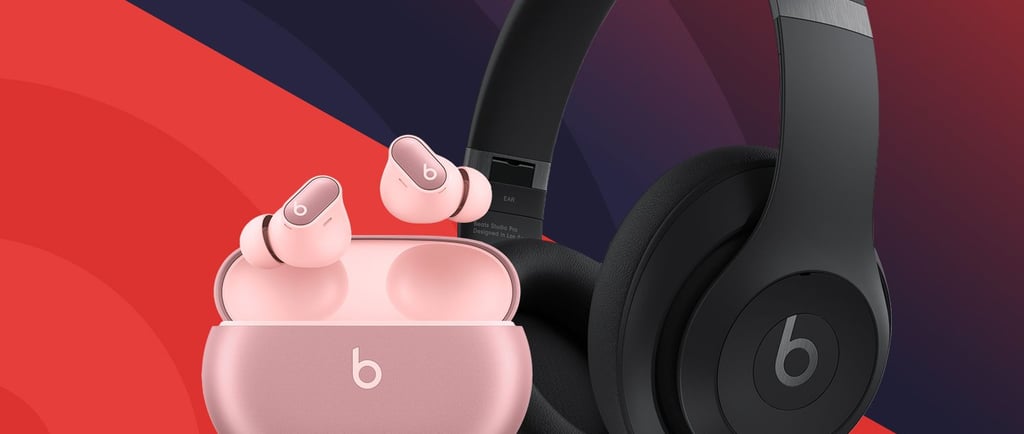
Client: Beats by Dre
Program: Market Insights Externship (Hosted by Extern)
Tools: Python (NLP), AI-assisted analysis, Competitive Benchmarking, SCQA Framework
Overview
In competitive consumer markets, brand strength alone is no longer enough. As alternatives become cheaper and more feature-dense, companies must understand why customers stay loyal—and where trust quietly erodes.
During my Market Insights externship with Beats by Dre, I analyzed large-scale consumer sentiment to identify experience risks and strategic opportunities within the true wireless earbuds category. The objective was not to describe the data, but to translate customer voice into clear, executive-level recommendations.
The Problem
The sub-$150 true wireless earbuds market is one of the most saturated segments in consumer electronics. While Beats remains culturally iconic, competitors such as Sony, Soundcore, and Jabra have aggressively closed the feature gap.
The core question was:
Where does Beats win emotionally—and where does it lose functionally?
Methodology
To answer this, I conducted a structured sentiment analysis using both Python and AI-assisted thematic extraction.
Data Sources
1,000+ verified consumer reviews
Beats Studio Buds and four direct competitors
Public e-commerce and review platforms
Analytical Approach
Text preprocessing and NLP-based sentiment classification
Theme clustering (fit, battery, controls, durability, price perception)
Competitive benchmarking across identical experience dimensions
Synthesis using the SCQA Framework and Pyramid Principle to ensure answer-first insights
This approach allowed me to move beyond surface-level ratings and isolate why customers felt the way they did.
Key Findings
1. The Strength: Tactile Control & Brand Identity
Consumers consistently praised Beats for:
Signature bass tuning
Clean, recognizable design
Physical “click” buttons, preferred over touch sensors during workouts
This tactile control emerged as a differentiated advantage, especially among active users.
2. The Gap: Durability & Workout Stability
A material negative sentiment trend (~25–30%) emerged around:
Buds slipping during workouts
Charging case hinge and build quality
Battery longevity relative to price
These complaints were not isolated—they formed a repeated pattern across platforms.
3. The Strategic Risk: Price–Perception Mismatch
At the $100–$150 price point, consumers increasingly compared Beats not just to lifestyle brands, but to feature-dense competitors offering:
Better fit stability
Longer battery life
More “durable” perceived construction
This created a quiet trust erosion risk: customers still loved the brand, but questioned long-term value.
Strategic Recommendations
Using an answer-first structure, I proposed a defensive product strategy focused on closing the utility gap without sacrificing brand identity.
Recommendation 1: Fit & Stability Reinforcement
Introduce integrated wing-tips or higher-friction ear tips to reduce workout slippage.
Expected Impact:
Lower return rates
Stronger appeal to high-intensity users
Recommendation 2: Case Durability Redesign
Reinforce hinge mechanics and adopt a scratch-resistant matte finish.
Expected Impact:
Increased perceived quality
Stronger MSRP justification
Recommendation 3: Position the Button as a Feature
Market the physical button as a premium utility, not a legacy design choice.
Expected Impact:
Differentiation in a touch-sensor-heavy market
Stronger appeal to athletes and professional users
Business Takeaway
Beats does not suffer from a branding problem—it faces a functional trust gap.
By aligning durability and stability with its emotional strengths, Beats can move from being a secondary choice to a category leader in the $100–$150 segment.
What This Project Demonstrates
This externship reflects how I approach analytics work:
I start with customer voice, not assumptions
I use data to identify risk before it shows up in revenue
I communicate insights using executive frameworks, not dashboards alone
This same methodology is directly applicable to FinTech, SaaS, and marketplace businesses, where trust, perception, and retention are mission-critical.